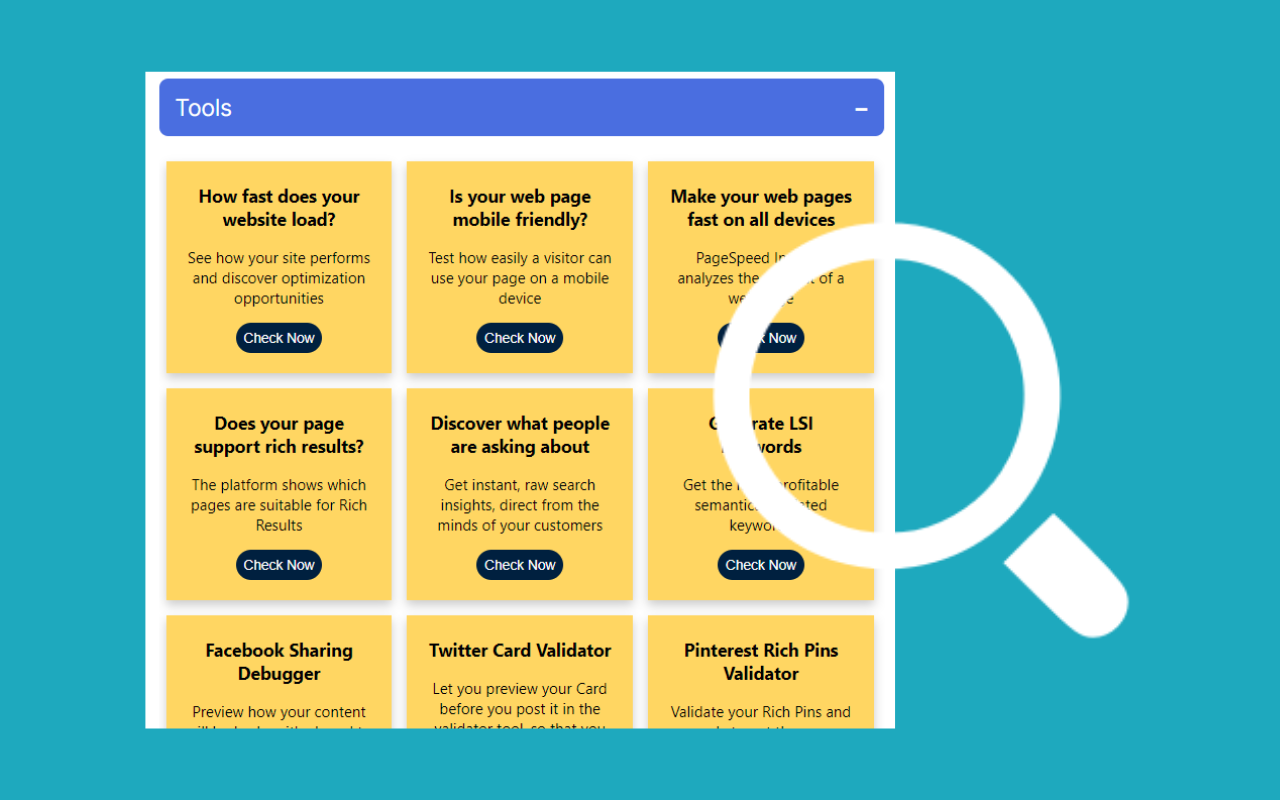
Comprehensive Analysis: These tools provide a holistic view of a website’s performance by examining various factors, such as SEO elements (keywords, meta descriptions), technical aspects (broken links, site speed), content quality, user experience (UX), and mobile-friendliness.
Actionable Recommendations: Beyond just identifying problems, webpage analyzers offer practical suggestions and recommendations to improve website performance.
Improved Local & Technical SEO: They help businesses analyze their websites based on SEO criteria, optimize various elements for targeted keywords, and address technical issues that hinder search engine rankings.
Enhanced User Experience: By identifying issues like slow loading speeds, navigation complexities, and mobile unresponsiveness, these tools contribute to creating a better user experience for website visitors.
Competitive Analysis: Some tools offer features to compare a website’s performance with competitors, providing valuable insights into their strategies and revealing opportunities for improvement.
Time Savings & Automation: They automate the analysis process, saving time and resources compared to manual audits, especially beneficial for businesses with multiple websites or agencies managing clients.
User-Friendly Reporting: They often generate detailed and easy-to-understand reports, sometimes with visually rich presentations, making it easier to grasp the findings and share them with developers or other stakeholders.
Diverse Features: A wide array of features might be available, including real-time data tracking, backlink analysis, keyword research, rank tracking, and integration with other marketing platforms.
Cons
Potential Cost: Some feature-rich webpage analyzer tools can be quite expensive, particularly for small businesses or those with limited budgets.
Learning Curve: While some tools boast user-friendly interfaces, more comprehensive ones might have a steep learning curve, especially for individuals without prior SEO or analytics experience.
Dependency on Data Accuracy: The quality and reliability of the insights depend heavily on the accuracy and completeness of the data collected by the tool, which can be influenced by factors like sampling, bot traffic, and cookie deletion.
Potential for Overkill: For very small websites or those with minimal traffic, some advanced tools might be overly complex and provide more features than necessary.
Focus on Specific Areas: Some tools might specialize in particular areas like content analysis, technical SEO, or backlink analysis, meaning a broader understanding might require combining insights from multiple tools.
Limited Scope in Free Versions: Many tools offer free tiers, but these often come with limitations on the number of audits, features available, or data retention, according to Measure School.
Not a Replacement for Human Expertise: Automated analysis, while helpful, shouldn’t completely replace human analysis and interpretation, especially when it comes to understanding context and developing nuanced strategies.